What No One Tells You About Life After the Funeral

After the funeral, life doesn’t return to normal – it shifts in ways you might not expect. The quiet moments at home, the absence of shared routines, and the weight of secondary losses can make grief feel even heavier. Emotional swings, guilt, and longing often surface when the initial wave of support fades. Grief is unpredictable, impacting not just your emotions but your body as well.
Here’s what stands out:
- Secondary Losses: Beyond missing the person, you lose routines, roles, and future plans tied to them.
- Physical Impact: Grief can manifest as exhaustion, chest tightness, or feeling stuck in survival mode.
- Emotional Struggles: Guilt and regret often surface, especially when life starts moving forward without them.
- Connection Through Objects: Everyday items and mementos become anchors, helping you maintain a bond with your loved one.
- Healing Through Art: Memorial art offers a way to process grief when words fall short, turning emotions into something meaningful.
Zellerhaus Art provides two options to honor and remember loved ones: custom paintings shaped by your memories or limited edition prints for immediate comfort. Both approaches offer a way to navigate grief while preserving their memory in a personal and lasting way.
What Grief Feels Like After the Funeral
The Loneliness of Daily Life Without Them
Once the funeral is over, life seems to return to normal for everyone else. But for you, the empty chair at the dinner table or the silence in the house is a constant reminder of the absence. Their physical presence is gone, and that loss feels impossible to ignore.
Grief doesn’t follow a straight line. It’s unpredictable and messy, as Alan D. Wolfelt, Ph.D., Director of the Center for Loss and Life Transition, explains. One moment, you might feel like you’re managing, and the next, a wave of sadness hits you out of nowhere. These emotional ups and downs can leave you feeling lost and unsteady, especially in the early weeks after losing someone.
For men, this loneliness often hides behind a facade. Research shows men are more likely to grieve in isolation, throwing themselves into work or distractions instead of confronting the vulnerability of mourning. David H. Rosmarin, Director of the Spirituality and Mental Health Program at McLean Hospital, puts it bluntly:
"It can be difficult for men to be honest with themselves and accept they may have trouble dealing with a loss. But they need to understand that it’s okay to give themselves permission to not be okay".
These emotional swings often open the door to deeper feelings of guilt and longing.
Guilt, Regret, and Longing
After the funeral, unresolved emotions tend to surface, hitting you when you least expect it. You might find yourself replaying moments you wish you could change – conversations you didn’t have, time you didn’t spend, or things you wish you’d done differently. Guilt can sneak up on you in surprising ways: feeling a sense of relief after a loved one’s long illness, laughing at something for the first time, or simply continuing with life while they’re gone.
These feelings, though uncomfortable, are completely normal. Some people feel guilty about things entirely beyond their control, convinced they should have done more to prevent the loss. Others carry the weight of unresolved arguments or words left unsaid.
The American Psychiatric Association now recognizes prolonged grief disorder, a condition marked by persistent and overwhelming feelings of loss. This includes intense longing or constant preoccupation with the deceased, occurring most of the day, nearly every day, for at least a month – provided the death happened a year or more ago. This kind of grief doesn’t just affect your emotions. It takes a toll on your body, flooding it with cortisol, which can raise blood pressure, blood sugar, and cholesterol levels.
In the midst of these emotional and physical challenges, the need for something tangible to hold onto becomes even more important.
The Need for Physical Reminders
While support groups and therapy can provide an outlet for your feelings, sometimes words just aren’t enough. You may find yourself searching for something you can see, touch, or hold – something that grounds you and reminds you that your loved one’s life mattered.
Everyday objects take on new meaning. A favorite coffee mug, an old sweater, or even an empty chair becomes more than just a thing – it’s a connection to the life they lived. Sorting through their belongings can be an emotional experience, stirring up memories and feelings you might not expect. These items become physical anchors in a sea of overwhelming emotions.
When words fail, these tangible reminders can express what you’re feeling in ways nothing else can. Keeping or creating these mementos offers a sense of stability when everything else feels chaotic. These items, often called "linking objects", help maintain your bond with the person you’ve lost, shifting your relationship from physical presence to one rooted in memory.
How Memorial Art Helps With Healing
The Healing Power of Art
When words fail to express the depths of grief, art steps in to bridge the gap. Grief often shows up physically – like a tight chest, a knotted stomach, or overwhelming waves of emotion. Creating or commissioning art provides an outlet for these feelings, offering a way to express emotions that words simply can’t capture, as Briana Colton highlights.
Science backs this up. Research shows that engaging in creative activities strengthens the brain’s connections between emotional processing and regulation. For instance, a 1996 study involving 52 grieving adults found that those who participated in 20 group art therapy sessions over three months experienced notable improvements in their overall health, particularly those who worked on visual art. Additionally, over 80% of trained art therapists focus specifically on helping individuals navigate grief. Art becomes a safe space for emotions that are otherwise too difficult to put into words.
As art helps soothe emotional wounds, transforming it into a personal tribute can deepen your connection with the loved one you’ve lost.
Personalized Memorial Art as a Tribute
Personalized memorial art takes the healing power of creativity to another level. These custom pieces not only help with emotional recovery but also celebrate the essence of the person you’ve lost. Unlike photographs, which capture a single moment in time, memorial art reflects the enduring qualities of your loved one – their warmth, humor, and the way they made you feel. A custom painting or portrait becomes a lasting reminder, ensuring their memory stays vivid and present.
This approach aligns with a shift in modern grief theory. Instead of focusing on detachment, researchers now emphasize the importance of maintaining meaningful, ongoing connections with those who have passed. Grief consultant Sheila K. Collins, Ph.D., explains:
"Grief is not about ‘moving on’ but carrying forward the love, lessons, and connections that shape us".
Finding meaning in loss – sometimes referred to as the "sixth stage of grief" – has been linked to improved immune function and overall well-being. Whether it’s a painting incorporating your loved one’s favorite colors, a portrait that captures their spirit, or abstract art symbolizing shared memories, these creations serve as tangible reminders of your bond. Memorial art goes far beyond decoration; it becomes a purposeful act of remembrance, helping to weave your loved one’s memory into your everyday life.
Healing From Grief & Loss | Dr. Mary-Frances O’Connor
sbb-itb-b542889
How Zellerhaus Art Transforms Grief Through Art
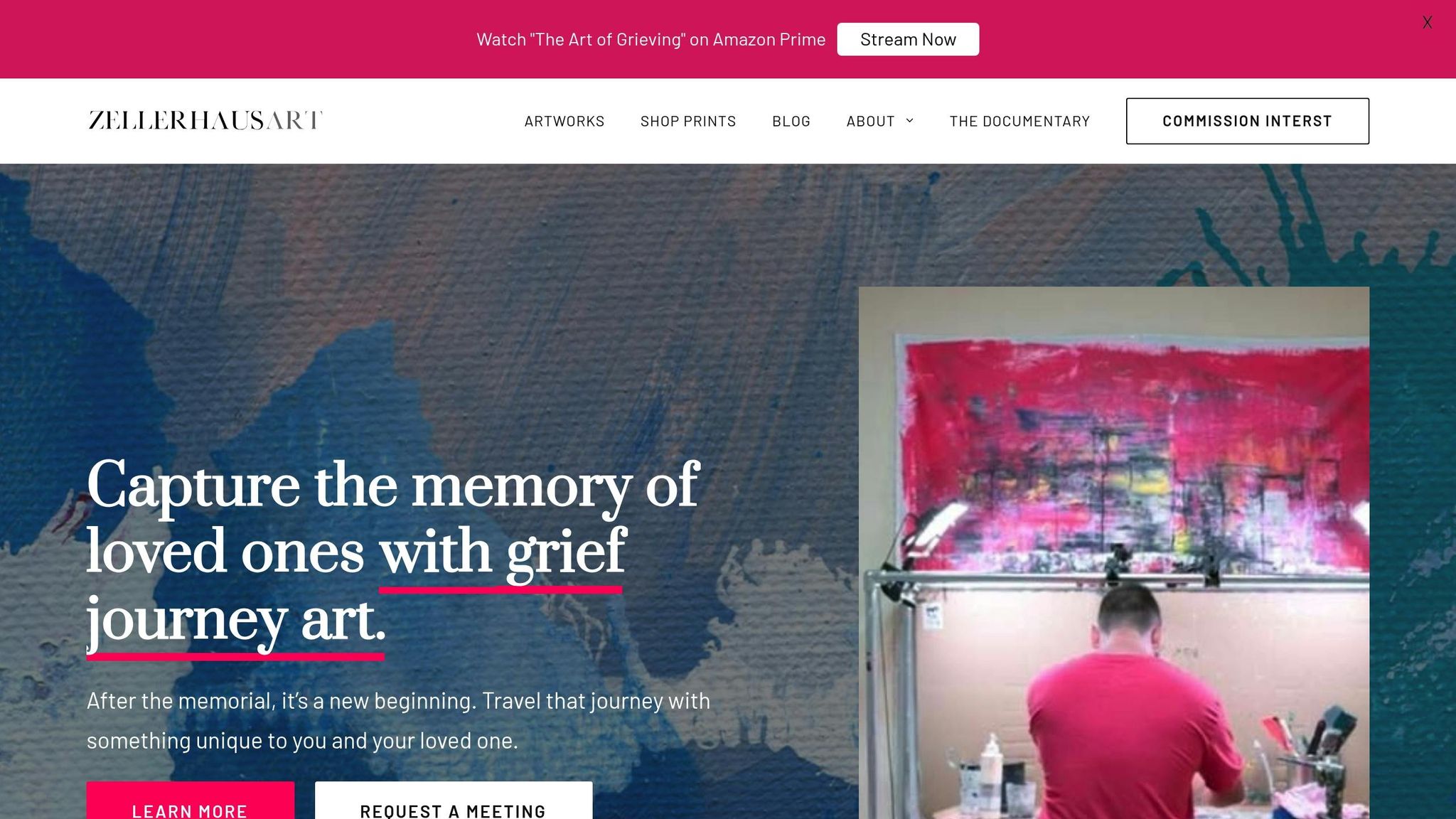
Zellerhaus Art takes the concept of memorial art to a new level, offering a way to turn memories into something tangible and deeply personal. Founded in 2019 by Preston Zeller after the loss of his brother, the initiative grew from his daily painting practice into a unique service for those navigating the difficult period following a funeral. This is a time when life feels profoundly different, and traditional memorials often fall short in addressing the ongoing emotional journey. Zellerhaus Art bridges this gap, creating a meaningful connection between loss and remembrance.
At its core, the process transforms memories, emotions, and even cremation ashes into abstract paintings that reflect the personal journey of grief. Unlike static memorials, these artworks evolve in meaning as healing unfolds.
The Custom Memorial Painting Process
Commissioning a custom memorial painting begins with sharing your memories and emotions with Preston Zeller. This collaboration shapes the foundation of a unique abstract tribute, designed to capture the essence of your relationship with your loved one.
Preston then translates these stories into an abstract painting. For those seeking an even more personal connection, cremation ashes can be incorporated into the artwork. Throughout the process, you’ll receive updates, allowing you to provide feedback as the painting takes shape. Once completed, the piece is delivered with a signed statement of authenticity, serving as a lasting and deeply personal tribute.
Limited Edition Art Prints for Healing
If a custom piece feels too overwhelming or isn’t the right fit, Zellerhaus Art also offers limited edition prints. Inspired by the emotional "Messy Middle" of grief, these abstract prints provide an accessible way to honor your feelings. Their open-ended design invites you to find your own meaning in the colors and shapes.
As grief counselor Mark Huffman suggests:
"Get a support system, and consider investing in something that’s personal to you for the process".
Unlike traditional memorials such as headstones, these prints are portable and ready to display wherever you need them most. They offer a comforting focal point during times of loss, helping you process your emotions while providing a sense of connection and solace.
Custom Memorial Paintings vs. Limited Edition Prints
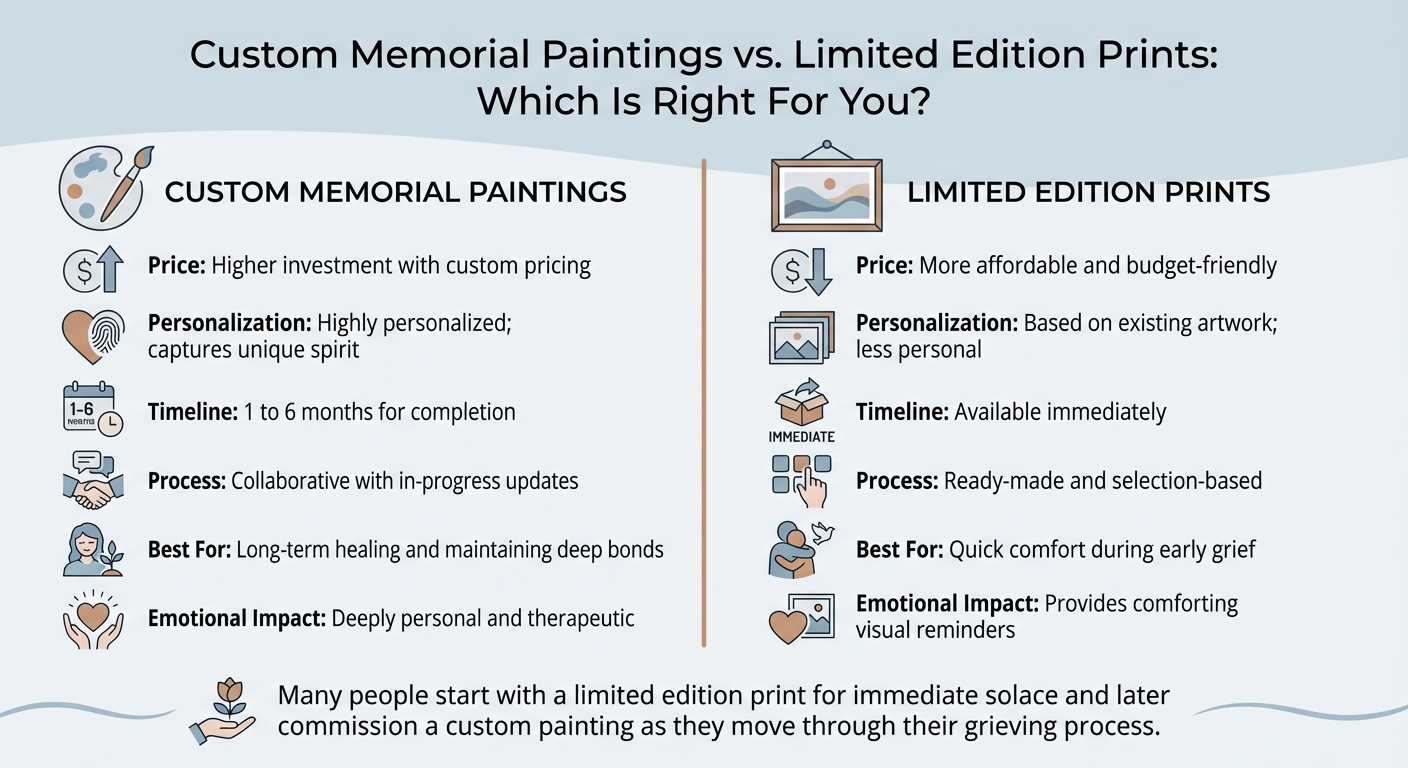
Custom Memorial Paintings vs Limited Edition Prints Comparison Guide
When it comes to memorial art, the choice between a custom painting and a limited edition print can be deeply personal. Both options provide meaningful ways to honor a loved one, but they cater to different timelines and emotional needs.
Custom memorial paintings are a labor of love, taking anywhere from one to six months to complete. This process involves working closely with Preston to create a one-of-a-kind piece that truly reflects the essence of your loved one. While it requires patience, many find the collaborative journey therapeutic and deeply personal.
Limited edition prints, on the other hand, offer a quicker solution. These are more affordable and ready to display immediately, making them ideal for memorial services or providing comfort during the early stages of grief.
Here’s a side-by-side comparison to help you decide which option suits your needs best:
Comparison Table: Custom Memorial Paintings vs. Limited Edition Prints
| Feature | Custom Memorial Paintings | Limited Edition Prints |
|---|---|---|
| Price | Higher investment with custom pricing | More affordable and budget-friendly |
| Personalization | Highly personalized; captures unique spirit | Based on existing artwork; less personal |
| Timeline | 1 to 6 months for completion | Available immediately |
| Process | Collaborative with in-progress updates | Ready-made and selection-based |
| Best For | Long-term healing and maintaining deep bonds | Quick comfort during early grief |
| Emotional Impact | Deeply personal and therapeutic | Provides comforting visual reminders |
Many people choose to start with a limited edition print for immediate solace and later commission a custom painting as they move through their grieving process and seek a deeper, lasting tribute. The decision ultimately depends on your timeline, budget, and emotional journey.
Conclusion
The months following a funeral often bring challenges that are hard to talk about. Feelings of loneliness, guilt, and the longing for something tangible to connect with can weigh heavily. As John Donne once said:
"He who has no time to mourn, has no time to mend".
Memorial art offers a way to turn grief into a path toward healing. Whether it’s expressing emotions that words can’t capture, preserving a connection with someone you’ve lost, or finding new meaning in a changed world, art has the power to bring comfort. This idea ties back to earlier discussions about using art to maintain a lasting connection with loved ones. Studies even suggest that finding meaning in loss can lead to better well-being and strengthen the immune system.
Zellerhaus Art provides tools to help you navigate this journey. Preston Zeller’s memorial paintings and limited edition prints serve as heartfelt tributes that support the healing process. A custom painting offers a deeply personal way to honor your loved one, while limited edition prints provide a comforting presence right away.
Whether you opt for a custom piece or a print, your choice reflects your unique path through grief. It’s a step toward healing that aligns with your personal journey.
Grief doesn’t follow a set timeline, and healing is a process. Exploring Zellerhaus Art’s offerings could be a meaningful way to honor your loved one while giving yourself the space to heal at your own pace.
FAQs
What are some practical ways to cope with the physical effects of grief?
Grief can take a toll on your body in ways you might not expect. You might feel constantly tired, notice changes in your appetite, struggle to sleep, or experience headaches and muscle tension. These physical reactions are a natural part of how your body responds to stress. Taking care of your physical health during this time is a crucial step in the healing process.
Start by establishing a gentle daily routine. Light activities, such as a 20-minute walk or a calming yoga session, can help ease tension and boost your mood. Make sure your meals include plenty of protein and whole grains to provide steady energy. Consistent sleep patterns are equally important – try creating a relaxing bedtime routine, like avoiding screens for an hour before bed, to improve your rest.
Staying hydrated is essential, as is cutting back on caffeine and alcohol, which can disrupt your energy levels and sleep. Relaxation techniques, such as deep breathing exercises or progressive muscle relaxation, can also help relieve physical stress. However, if you experience symptoms like chest pain, shortness of breath, or ongoing insomnia, it’s important to consult your doctor. They can rule out any medical concerns and guide you toward additional support, such as counseling or grief-focused support groups.
Lastly, give yourself permission to rest and recharge. Creative outlets like journaling, painting, or crafting a personal memorial piece can provide a meaningful way to process emotions. These activities not only help you express your feelings but also promote relaxation and restore a sense of balance.
How can everyday objects help in the grieving process?
Everyday objects often hold the power to provide comfort and connection during times of loss. A favorite shirt, a piece of jewelry, or even a handwritten note from a loved one can become a source of solace, serving as physical reminders of their presence. These items help bridge the gap between the past and present, offering a sense of closeness when it’s needed most.
Some choose to take this connection a step further by turning these objects into memorial art. Whether it’s a collage filled with photos and keepsakes or a sculpture incorporating personal items, the act of creating something meaningful can be a profound way to express grief. This process not only honors the memory of a loved one but also provides an outlet for emotions, helping with the journey toward healing.
By weaving these familiar items into personal rituals or repurposing them into something new, people can navigate their grief in a way that feels both personal and meaningful. It’s a way to celebrate cherished memories, process emotions, and keep the essence of a loved one alive as they move forward.
How can creating memorial art help with grief?
Memorial art offers a heartfelt way to navigate grief, turning the pain of loss into something physical and deeply meaningful. Whether it’s a painting, a sculpture, or a custom creation, this form of expression helps convey emotions that words often can’t capture. These works serve as enduring tributes, celebrating the unique essence of your loved one while providing comfort and a sense of connection during difficult times.
Creating or commissioning art also plays a role in emotional healing, engaging areas of the brain linked to memory and feelings. Some find peace in crafting abstract pieces inspired by their loved one’s spirit, while others prefer a custom artwork that reflects their legacy. This process not only brings a sense of purpose but also transforms grief into an ongoing ritual of remembrance, offering moments of solace along the way.