Does Grief Ever Get Easier?

Grief doesn’t go away, but it changes over time. It’s not something you “get over” – you learn to live with it. The pain softens, the waves of sadness become less frequent, and you find ways to carry the loss differently. Here’s what you need to know:
- Grief is personal: Everyone experiences it differently, shaped by their relationship with the person they lost.
- It’s not linear: Grief ebbs and flows. You might feel fine one day and overwhelmed the next.
- Triggers are normal: Anniversaries, scents, or songs can bring back emotions unexpectedly.
- Support helps: Talking to friends, family, or professionals can ease the burden.
- Memorial art offers comfort: Creating or owning art that honors your loved one can provide a sense of connection and healing.
Grief is a form of love that evolves, and while it doesn’t disappear, it becomes something you learn to carry forward.
Grief Does Not Get Easier. We Just Learn How to Carry It.
Why Grief Doesn’t Follow a Straight Path
Grief doesn’t move in a straight line from pain to healing. Instead, it ebbs and flows like waves, often catching you off guard. You might feel like you’re finally doing better, only to be hit with a sudden wave of sadness that feels just as raw as the early days of your loss. This isn’t a step backward – it’s simply how grief works.
Susan Glaser, a bereavement counselor at Memorial Sloan Kettering Cancer Center, explains this experience beautifully:
"Grief is a series of loops: It’s possible to circle back to where you were and still keep moving onward."
Grief feels unpredictable because it’s not just about losing a person. It’s also about mourning the roles they played in your life, the shared memories, and the future you envisioned together. Each of these losses requires its own adjustment. According to the American Psychological Association, the most intense period of grief usually lasts between six months and two years, but this timeline can vary widely from person to person.
The Stages of Grief Explained
You’ve probably heard of the five stages of grief: denial, anger, bargaining, depression, and acceptance. These stages were first introduced by psychiatrist Elisabeth Kübler-Ross, but they were based on interviews with terminally ill patients facing their own deaths – not people grieving a loved one. That’s why these stages don’t work like a checklist.
Grief doesn’t follow a set order. You might skip some stages, experience several at once, or revisit the same one multiple times. One day you might feel acceptance, and the next, anger. Even Elisabeth Kübler-Ross clarified this common misconception:
"They [the stages] were never meant to help tuck messy emotions into neat packages. They are responses to loss that many people have, but there is not a typical response to loss, as there is no typical loss."
What Brings Grief Back
Even after finding some stability, certain triggers can bring grief rushing back. These “trigger waves” often come unexpectedly. Common triggers include calendar-based events like birthdays, holidays, anniversaries, or the date of your loved one’s passing. Life milestones – graduations, weddings, or the birth of a child – can also stir up intense emotions.
Sensory reminders are particularly powerful. A familiar scent, a song, or the smell of a favorite dish can instantly transport you back to painful memories. Places you used to visit together or even seeing their belongings can also spark a wave of grief. Dr. Jessy Levin, a psychologist at Memorial Sloan Kettering Cancer Center, offers this advice:
"Allow the wave to come, but also allow it to go… Your grief will ebb."
For predictable triggers, like anniversaries or holidays, planning ahead can make a big difference. Surrounding yourself with support or engaging in a meaningful activity can help you navigate these tough moments. It’s important to understand that these recurring waves don’t mean you’re failing at grief – they’re simply part of the process. Over time, with support, these waves will begin to change, shaping how you carry your grief moving forward.
How Grief Shifts Over Time
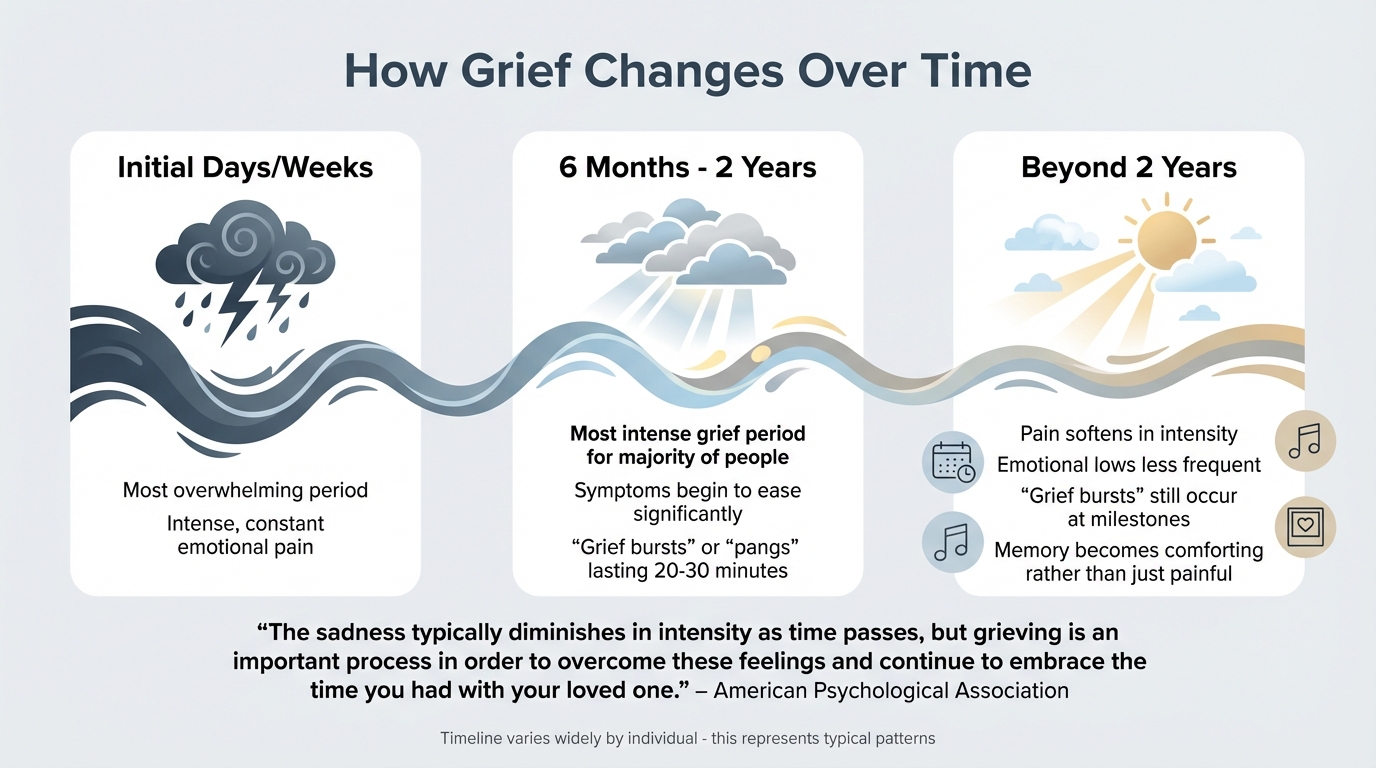
How Grief Changes Over Time: A Visual Timeline
Grief’s intensity changes as time passes. Those initial days are often the most overwhelming, but gradually, the emotional lows become less frequent and less intense. This doesn’t mean your love or connection fades – it simply means you’re finding a way to carry the loss differently. These shifts create space to understand how time influences the grieving process.
How Time Affects Grief
For most people, grief symptoms ease significantly between six months and two years after a loss. While the pain softens, "grief bursts" or "pangs" – short episodes of intense emotion lasting 20–30 minutes – may still occur, often triggered by milestones like anniversaries or family events. The American Psychological Association explains:
"The sadness typically diminishes in intensity as time passes, but grieving is an important process in order to overcome these feelings and continue to embrace the time you had with your loved one."
Healing doesn’t mean forgetting. Instead, the memory of your loved one becomes a part of you, offering comfort and meaning rather than just pain.
Why Support Matters
While time can help ease the pain, support from others plays a crucial role in recovery. Studies show that with social connections and healthy habits, most people naturally heal over time. Having trusted friends, family, or counselors to lean on creates a safe space to share your feelings and prevents isolation.
Facing grief alone can feel unbearable. Talking about your loved one, sharing stories, and having someone truly listen can help you process your emotions better. Support might come from a caring friend who checks in, a faith group that offers a sense of belonging, or a professional counselor who helps untangle complex feelings. These connections make a meaningful difference.
Finding ways to honor your loved one also supports healing. Writing in a journal, creating a scrapbook, or starting a memorial tradition – like planting a tree or giving to a cause they cared about – can keep their memory alive. These acts celebrate your relationship and help you move forward with purpose.
sbb-itb-b542889
How Memorial Art Supports Healing
Memorial art offers a unique way to channel grief, turning pain into something meaningful and tangible. By commissioning memorial art, you’re not just honoring your loved one – you’re actively engaging in a healing process that words alone often can’t achieve. While traditional coping methods often focus on verbal expression, art provides a silent outlet for emotions that may feel too overwhelming or complicated to articulate. Creating a piece of art from your memories is more than just crafting something beautiful; it’s a deeply personal step toward emotional recovery.
Art allows grief to take a physical form. Instead of suppressing painful emotions, you give them an outlet – something you can touch, see, and revisit over time. This process helps maintain a connection with your loved one while also enabling forward movement. Studies have shown that expressing loss through creative activities can improve well-being and even enhance immune system health.
It’s no surprise that over 80% of art therapists specialize in working with individuals who are grieving. Art offers a sense of control during periods of chaos and unpredictability. Choosing colors, textures, and designs helps reclaim a sense of agency, making the creative process as empowering as it is therapeutic.
Turning Grief Into Custom Paintings
Zellerhaus Art specializes in creating custom abstract paintings designed to reflect your emotions and memories of your loved one. The process begins with a personal consultation, where you can share stories, select meaningful colors, and decide how the artwork will represent your connection. This collaborative approach ensures that the final piece truly embodies the essence of the person you’re honoring.
As the painting evolves, you’ll receive updates, allowing you to feel connected to the process every step of the way. Once completed, each artwork includes a signed statement of authenticity, making it a lasting tribute that can be displayed in your home and passed down through generations. The goal isn’t to create a photorealistic image but to translate emotions into abstract colors and forms. This approach provides a safe, external space for your grief while also reinforcing the bond you share with your loved one.
Adding Cremation Ashes to Artwork
For those seeking an even deeper connection, Zellerhaus Art offers the option to incorporate cremation ashes directly into the paint. This unique method creates a physical link within the artwork itself. The ashes become part of the painting’s texture and composition, transforming what remains into a living, meaningful piece that you can keep close.
This approach fulfills a profound need for tangible connection. When you look at the finished artwork, you’re not just seeing a representation of your loved one – you’re experiencing something that physically includes a part of them. For many, this creates a deeply comforting sense of closeness and continuity, offering an enduring source of solace during the healing journey.
Ways to Use Art in Your Healing Process
Art has a unique way of transforming grief into something tangible and meaningful. Here are some practical approaches to weave art into your healing journey, extending the comforting presence of memorial art into your daily life.
Order a Custom Memorial Painting
Commissioning a custom painting through Zellerhaus Art allows you to create a deeply personal tribute to your loved one. During a one-on-one consultation, you can share cherished memories, select colors that hold special meaning, and collaborate on a design that reflects your connection. Studies suggest that engaging in creative expression can promote emotional well-being and even benefit your immune system.
Display Grief-Inspired Art Prints
If commissioning a painting feels too personal or time-intensive, grief-inspired limited edition prints offer another option. These pieces can serve as daily reminders, encouraging quiet moments of reflection. Expressive art therapist Valerie McCarney noted that hospice patients who displayed grief-inspired art found it easier to process emotions that were difficult to put into words. You can enhance the healing atmosphere by pairing these prints with simple rituals – lighting a candle, placing natural elements like stones or pressed flowers nearby, or keeping a journal close for spontaneous thoughts and reflections.
Combine Art with Other Grief Practices
Art becomes even more powerful when paired with other healing activities. For instance, your custom painting could inspire expressive writing, helping you explore the emotions evoked by its colors, shapes, or symbols. If meditation is part of your routine, placing your artwork in your meditation space can provide a grounding focal point. Additionally, creating Zentangle or mandala drawings offers a calming way to process complex feelings. Small rituals, such as lighting a candle or writing letters, can further deepen your connection to your loved one. These combined practices not only honor your bond but also support your ongoing journey toward healing.
Conclusion
Grief never truly disappears; it changes shape over time. The sharp edges of pain gradually soften, and while the sadness may ebb and flow, it becomes something you learn to carry rather than something that overtakes you. Memorial art offers a meaningful way to bridge the gap between memory and the life you continue to build. As artist Preston Zeller, reflecting on the loss of his brother, put it: "The reality for everyone I’ve spoken with is that the person’s loss never leaves you. There will always be reminders… These memories never fade". While the memories remain, your ability to hold them alongside your evolving life grows stronger.
"Acceptance is about acknowledging the new reality of our lives without our loved one and finding ways to move forward." – Bay Area CBT Center
Personalized memorial art from Zellerhaus Art provides a heartfelt way to keep that connection alive. These pieces transform emotions into something tangible, offering a touchpoint for reflection and a way to honor your loved one’s presence in your daily life. Healing doesn’t mean forgetting – it means finding ways to celebrate the bond you shared while embracing the future. Memorial art serves as a bridge, connecting your memories to the present and helping you carry that love forward.
Every piece of memorial art tells a story unique to your journey of loss and remembrance. Whether it’s displayed prominently in your home or becomes part of a quiet space for reflection, these creations honor the past while offering comfort and hope for the days ahead.
FAQs
How can I cope with sudden waves of grief?
Sudden waves of grief can hit hard, leaving you feeling unsteady, but there are ways to face them with care. Start by giving yourself permission to fully experience your emotions – whether it’s sadness, anger, or even numbness. These feelings are a natural part of the grieving process and don’t need to be judged. Simple grounding techniques, like deep breathing, taking a short walk, or tuning into your senses (what you see, hear, or touch), can help anchor you in the present. Keeping a steady routine with enough sleep, balanced meals, and light exercise can also provide a sense of stability when emotions feel overwhelming.
Creative expression can offer a meaningful way to process grief. Activities like drawing, journaling, or crafting allow you to release emotions and regain a sense of control. Creating something personal, such as a memory box or a custom piece of art that honors your loved one, can be both comforting and therapeutic. Even small creative acts, like doodling or scribbling, can help transform difficult feelings into something tangible and manageable.
Consider building a "grief toolkit" to prepare for these emotional waves. This could include soothing items like a favorite playlist, a photo album, or a journal, along with contact information for supportive friends or a therapist. Adding simple art supplies, like colored pencils or a sketchbook, can give you an outlet for your emotions when grief feels too heavy to bear. By blending self-care with creative expression, you can navigate these tough moments and gradually find steadier emotional footing.
How does memorial art help with grief?
Memorial art offers a powerful way to navigate grief by turning deep emotions into a physical form. Whether it’s a painting, a sculpture, or a custom-crafted piece, these works serve as lasting reminders of a loved one. They provide comfort and a space for reflection, helping individuals find moments of solace during the healing journey.
The process of creating or commissioning such artwork can also be deeply therapeutic. It allows people to express emotions that might be too overwhelming or complex to articulate. This creative outlet can calm the mind, ease stress, and nurture a sense of closeness to the person being remembered. Beyond honoring their memory, memorial art fosters shared moments of storytelling and connection, bringing family and friends together in collective healing.
Why is having support from others important when you’re grieving?
Having the support of others during grief is incredibly important. It helps ease the feeling of isolation and provides much-needed emotional comfort. Friends and family can create a safe space for you to express your emotions, reminding you that what you’re feeling is valid. They can also help you navigate the intense sadness that often accompanies loss.
Beyond emotional support, there are practical ways loved ones can step in. They might handle everyday tasks that feel overwhelming, suggest healthy ways to cope, or offer perspective when you’re struggling. Relying on others during this time can make it easier to process your grief and prevent it from becoming overwhelming or prolonged.
Being part of a supportive community also brings a sense of connection and continuity. It reminds you that your relationships and memories remain meaningful, even after loss. This shared support can provide a space to honor your loved one while gradually moving toward healing.