7 Ways Memorial Art Helps Process Grief
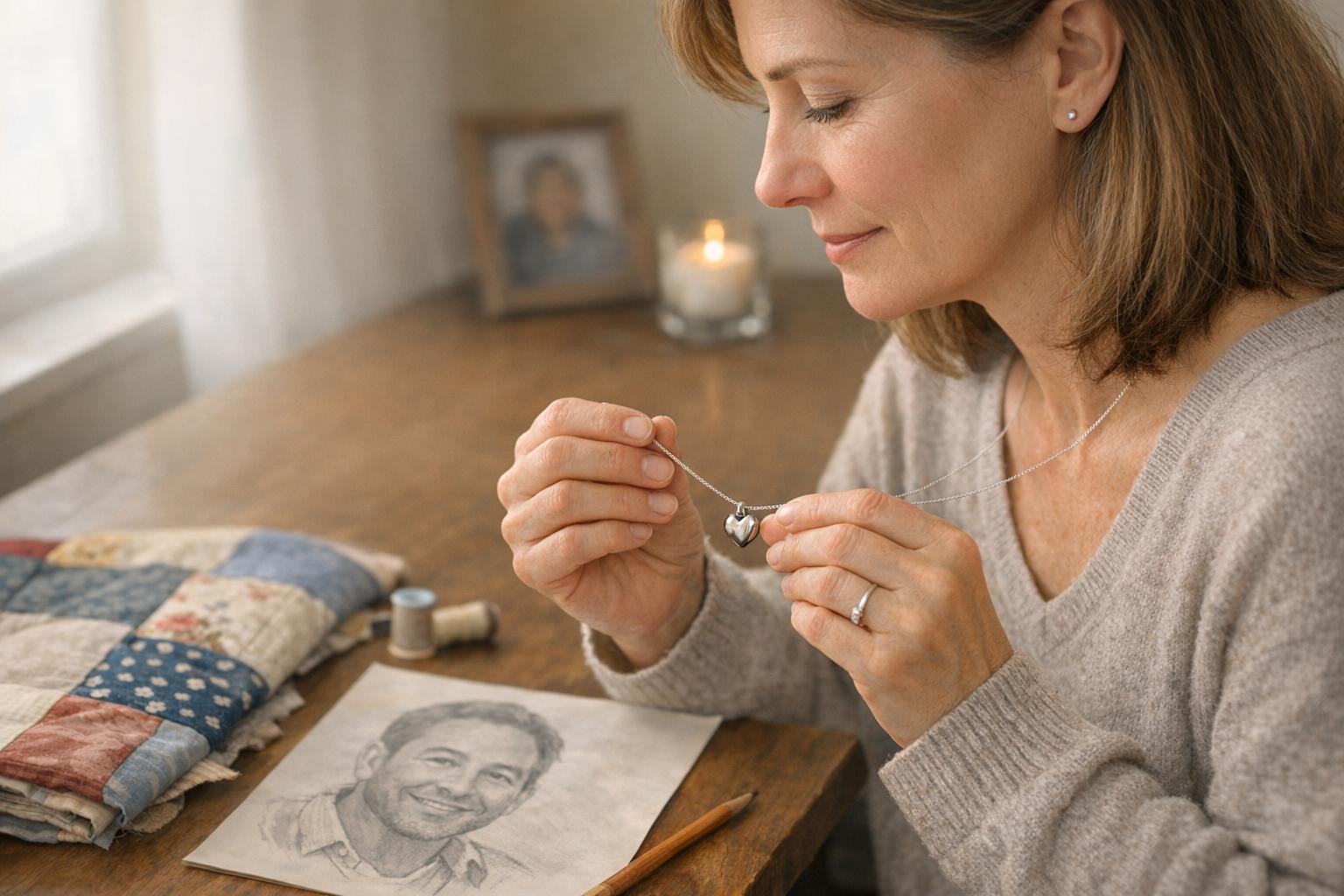
Memorial art offers a personal way to honor loved ones while helping process grief. It transforms emotions into physical expressions, creating a connection with the person you’ve lost. Whether it’s a painting, sculpture, or memory quilt, these tributes provide comfort, healing, and a sense of control during difficult times.
Here’s how memorial art helps:
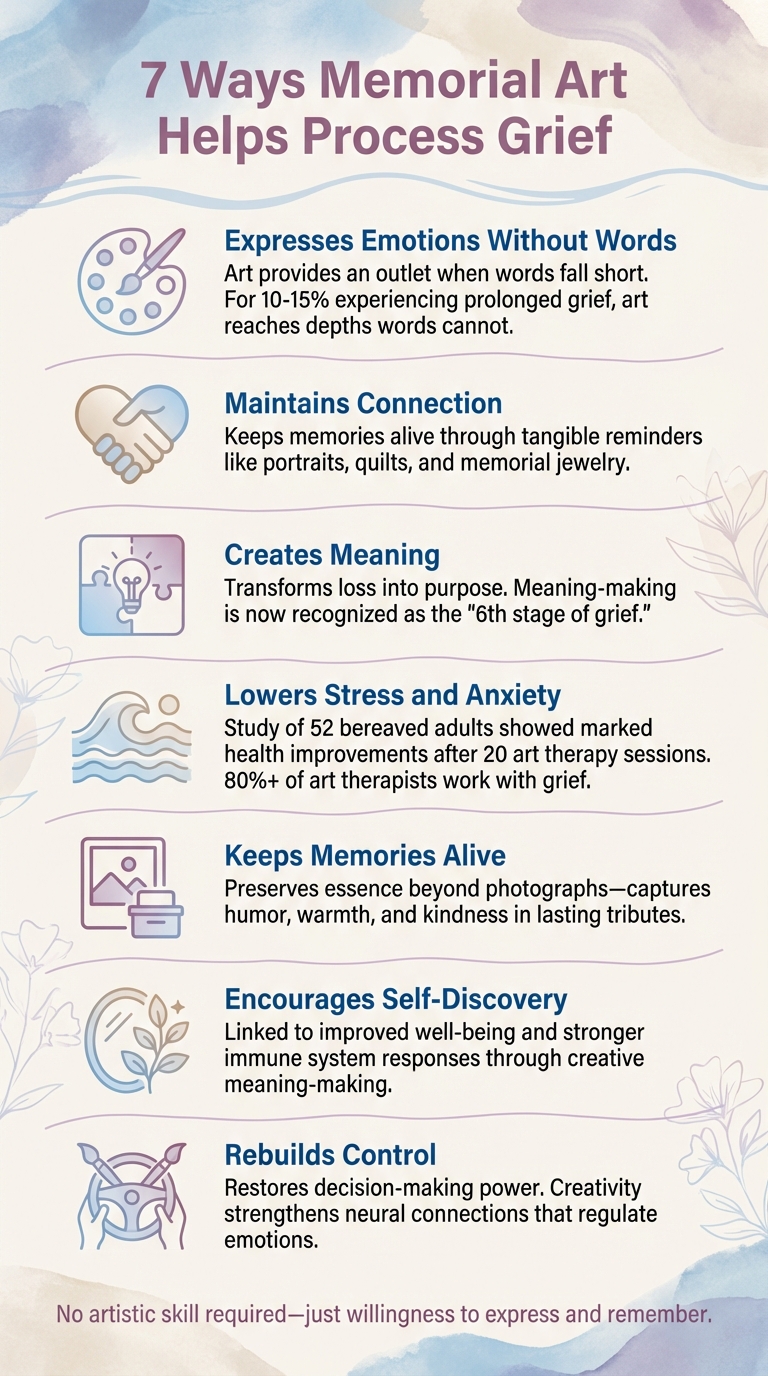
- Expresses emotions without words: Art provides an outlet when words fall short.
- Maintains connection: Keeps memories alive through tangible reminders.
- Creates meaning: Helps reshape life after loss by celebrating their impact.
- Reduces stress: Engaging in art alleviates physical and emotional tension.
- Preserves memories: Turns cherished moments into lasting tributes.
- Encourages self-discovery: Helps explore and understand your evolving emotions.
- Restores control: Making art allows you to take actionable steps in your grief journey.
These methods provide a space for healing, honoring memories, and finding solace in loss. Memorial art doesn’t require artistic skill – just the willingness to express and remember.
7 Ways Memorial Art Helps Process Grief
Grief Art for Healing | Custom Memorial Art Timelapse
sbb-itb-b542889
1. Offers a Way to Express Emotions Without Words
Grief has a way of rendering you speechless. That heavy feeling in your chest, the tension gripping your shoulders – it’s hard to put those sensations into words. Memorial art provides a way to channel those emotions, offering a voice when words fail. In the silence of grief, art becomes a powerful language of its own.
Art therapist Briana Colton from Fraser Mental Health emphasizes this beautifully:
"When you don’t have words, sometimes an image says it better".
Whether it’s through painting, sculpting, or stitching, creating art helps release pent-up emotions. Techniques like color-coded feelings charts or body mapping can make sense of the chaos. For instance, assigning specific colors to emotions like anger, sadness, or fear gives you a sense of control over what feels unmanageable. Similarly, drawing an outline of your body and marking where you physically feel grief can uncover patterns you might not have noticed before.
For the 10% to 15% of people who experience prolonged, intense grief, art offers a depth that words alone often can’t reach. It taps into the subconscious, making it an invaluable tool when traditional talk therapy feels like it’s hitting a wall.
If diving straight into creating feels overwhelming, collage work is a gentler way to start. Arranging photos, pieces of fabric from a loved one’s clothing, or other meaningful items allows you to focus on assembling rather than creating – easing the pressure while still offering an outlet for emotional release.
2. Helps Maintain Connection with Lost Loved Ones
One of the greatest fears after losing someone is that their memory might fade with time. Memorial art offers a way to keep their presence alive in a deeply personal and tangible way. As art therapist Briana Colton puts it:
"Making art is an external reminder of the person you lost, ensuring their memory endures."
A custom portrait, for instance, goes beyond what a standard photograph can capture. It might reflect the warmth of their smile, the twinkle in their eyes when they laughed, or the quiet strength they carried in life. These pieces of art bring an emotional depth and a sense of presence that photographs often can’t replicate, filling your space with a comforting reminder of who they were.
Memorial art can also take on physical forms that offer comfort through touch and familiarity. A memory quilt, crafted from their favorite clothing, can wrap you in the textures and scents you associate with them, bringing a sense of closeness. Similarly, memorial jewelry – like a locket holding their photo or a pendant containing ashes – allows you to carry their memory with you, wherever you go. These physical keepsakes tie into the "continuing bonds" concept, helping you maintain a vivid connection with your loved one.
Another meaningful way to honor their memory is through legacy art. If they enjoyed painting, you could use their favorite brushes or colors to create something new. Or, if knitting was their passion, working with their preferred yarn can feel like a shared experience. These small acts not only honor their creative spirit but also offer a deeply personal way to feel close to them, keeping their memory alive in your everyday life.
3. Creates Meaning from Loss
Loss has a way of turning life upside down, dismantling routines, beliefs, and the future you once envisioned. In these moments, memorial art becomes more than just an artistic outlet – it transforms into a way to rebuild meaning in a life forever altered by grief.
Grief experts now describe "meaning-making" as the "sixth stage of grief". It’s not about letting go or moving on; instead, it’s about channeling those overwhelming emotions into something tangible. Whether you’re painting, sculpting, or crafting, the act of creating allows you to shape your feelings and reclaim a sense of control. It shifts the narrative from "I lost someone" to "I’m celebrating who they were and the impact they had on my life."
Studies have shown that finding meaning after loss is linked to better emotional health and even improved immune function. For the 10–15% of people who experience complicated grief – where mourning becomes prolonged and debilitating – art-based meaning-making can play a vital role in their healing process.
Creating something meaningful doesn’t erase the pain, but it offers a broader perspective. Instead of focusing solely on the loss, you can honor the entirety of your loved one’s life. For instance, a memorial scrapbook can tell their story – capturing the laughter, the challenges, and the quiet, defining moments. A mosaic crafted from shattered glass might represent how your life feels broken but can still come together into something beautiful and whole. These aren’t just art projects; they’re statements of love and remembrance, a way of saying, "This person mattered, and their legacy lives on."
Art therapist Briana Colton explains it beautifully:
"a beautiful memory holder… an external reminder of the person you lost, and then you feel this person isn’t lost to the ether".
That physical creation becomes a touchstone, helping you move forward with purpose. While your loved one may no longer be here, the meaning they brought to your life endures. Up next, we’ll explore how memorial art can also help alleviate stress and anxiety through creative expression.
4. Lowers Stress and Anxiety
Grief isn’t just an emotional experience – it has a way of settling into your body, creating physical tension that can feel impossible to shake. Art therapist Briana Colton puts it this way:
"Grief and loss is a whole-body experience. Emotions can get trapped in your body, and the act of creating can discharge some of those feelings."
The science backs this up. A study involving 52 bereaved adults who attended 20 group art therapy sessions over three months showed marked improvements in overall health. Plus, over 80% of trained art therapists report working with individuals coping with loss.
Art doesn’t just offer an outlet for emotions – it also provides a much-needed distraction from the endless loop of painful thoughts. By engaging the right side of your brain, it helps release tension and creates a safe space for emotions to ebb and flow. Instead of bottling up feelings (which only adds to stress), art gives you a way to express them in a healthy, transformative way.
Even simple activities, like making a feelings chart or putting together a memory box, help turn abstract emotions into physical, manageable forms. These hands-on projects don’t just express deep feelings – they also allow you to process grief at a steady pace. Whether it’s knitting with your loved one’s favorite colors, painting memory rocks, or creating a collage, these repetitive, tactile activities encourage what experts call "slow grieving time." This approach helps you process emotions without feeling overwhelmed.
Art gently meets you where you are, offering a way to move through grief without rushing or suppressing what you’re feeling.
5. Keeps Memories Alive
The loss of a loved one often brings the fear that their memory might begin to fade with time. Memorial art offers a way to preserve those memories, turning them into something physical and enduring. This process creates a lasting connection, helping to keep the essence of the person alive even in their absence.
Art therapist Briana Colton explains this beautifully:
"The piece you create can be a beautiful memory holder… Making art is an external reminder of the person you lost, and then you feel this person isn’t lost to the ether."
Unlike a simple photograph, memorial art has the power to capture the deeper essence of a person – their humor, warmth, and kindness. For example, a custom painting might reflect their laughter and favorite colors, while a memory quilt made from a beloved piece of clothing can feel like a comforting embrace from the past. These pieces provide solace, especially during the hardest moments.
Memorial art blends cherished elements – such as personal belongings or favorite pastimes – into everyday life. It transforms the pain of loss into a meaningful tribute, offering both comfort and a way to celebrate their lasting impact.
6. Encourages Self-Discovery and Growth
Grief has a way of reshaping who we are, often leaving us to piece together a new version of ourselves. Memorial art can play a key role in this process, offering a way to explore and express your evolving identity. Through creation, it becomes more than just an outlet for loss – it’s a mirror reflecting the changes within you.
Art therapist Briana Colton sheds light on this process:
"By creating this art, people can start pulling their emotions out of their bodies and gain more ownership over what they’re feeling".
This act of externalizing emotions is important because grief often feels like a heavy, intangible presence inside. By giving those feelings a physical form, you begin to explore your inner world in ways that words often fail to capture.
Art has a unique ability to bypass language and tap into subconscious emotions. Studies even suggest that engaging in creative activities to find meaning after loss is linked to improved well-being and stronger immune system responses. Something as simple as tracing your hands on paper – filling one side with what was important before your loss and the other with your current priorities – can reveal how much you’ve grown and adapted over time.
Memorial art also provides a safe space to navigate grief, allowing you to uncover your resilience, face conflicting emotions, and recognize emerging values. This isn’t about “letting go” or “moving on”; it’s about moving forward with a deeper understanding of yourself. As Rachel E. Weiskittle from Virginia Commonwealth University explains:
"meaning making following loss is a cyclical course in which the pain of bereavement prompts efforts to find meaning… with new meanings forming and integrating into a system of beliefs".
7. Rebuilds a Sense of Control
Grief has a way of making you feel powerless. Loss isn’t something you choose – it happens to you, often leaving you adrift and stripped of your sense of agency. Memorial art flips the script, giving you the opportunity to take action and make choices.
Even small decisions – like picking colors, selecting textures, or designing a composition – restore a sense of decision-making power. And that matters because creativity is inherently active; it pushes back against the helplessness that often defines grief. By engaging your hands and mind in creating something, you’re no longer just enduring the pain – you’re actively shaping how you process it. This act of creation not only helps express emotions but also strengthens your sense of control, which can be a deeply empowering experience.
Art also provides what therapists call "containment", a safe space to hold overwhelming emotions. For example, creating a memory box allows you to decide when and how to engage with your feelings. This physical act of control helps you navigate your grief on your own terms, rather than being caught off guard by it.
On a deeper level, creative activities influence how your brain regulates emotions. Engaging in art strengthens neural connections that help manage emotional swings and intrusive thoughts. This biological shift can make it easier to handle the ups and downs of loss. Douglas Mitchell, LMFT, captures this beautifully:
"Grief is given containment – a place to be held. This containment permits the pain to speak and encourages our healing".
Conclusion
Grief doesn’t follow a schedule or a one-size-fits-all path. Memorial art offers a meaningful way to honor both your emotions and the memory of your loved one, meeting you wherever you are in your journey. These seven creative ideas provide an opportunity to channel your grief into something heartfelt and empowering.
Studies suggest that engaging in creative activities can improve well-being and even positively impact your immune system. These aren’t just abstract benefits – they’re measurable changes that come from combining emotional expression with the act of creating. Whether it’s a custom painting, a memory quilt, or another form of memorial art, each piece becomes a way to turn sorrow into a lasting tribute and a step toward healing.
Rachel Naomi Remen, a noted author and healer, captures this beautifully:
"At the deepest level, the creative process and the healing process arise from a single source".
By creating art, you’re not just making something tangible – you’re actively participating in your own healing.
If grief feels overwhelming, memorial art could be the outlet you need. It doesn’t require advanced artistic talent – just the courage to turn your pain into something meaningful. Your grief deserves a space to be expressed and honored, and memorial art can provide that space. Through it, loss becomes a pathway to healing.
FAQs
How can I create meaningful memorial art if I’m not artistic?
You don’t have to be an artist to craft something meaningful as a tribute to a loved one. Start by focusing on the emotions and memories you want to capture rather than worrying about how the final piece will look. Simple projects, like arranging cherished photos, making a collage, or even sketching basic shapes, can carry profound meaning. Even small choices, like using a color that reminds you of your loved one, can evoke powerful feelings.
If you prefer a hands-on approach, consider working with materials like clay, assembling keepsakes, or creating a memory box. These activities don’t require any special expertise and offer a way to channel your emotions into something deeply personal. The goal isn’t to create something perfect – it’s to make a heartfelt tribute that helps you process your grief and honor your loved one in a way that feels right to you.
What materials are commonly used to create memorial art?
Memorial art brings together various materials to help people channel their emotions and pay tribute to loved ones. Paints such as watercolors, acrylics, or oils are often chosen for their ability to create vibrant, textured pieces. For more intricate or symbolic designs, dry media like colored pencils, markers, or pastels are popular. Surfaces like paper, canvas, or specialty papers serve as the foundation, often enhanced with decorative elements like fabric, glitter, or stickers to add a personal touch.
For those interested in three-dimensional creations, materials like modeling clay or sculpting compounds work well for keepsakes such as plaques, statues, or memory boxes. Collages, on the other hand, can include photographs, fabric scraps, or personal mementos, offering a deeply personal way to honor memories. These materials provide countless ways to express grief and preserve meaningful connections through creativity.
Can memorial art be used in grief therapy?
Memorial art plays a meaningful role in grief therapy, offering individuals a creative way to process emotions and honor their loved ones. Therapists often incorporate activities like painting, sculpting, or assembling collages, giving people a constructive outlet to express their grief. These artistic practices can help externalize difficult feelings, ease emotional pain, and serve as a lasting tribute to those who have passed.
Art therapists might work with clients to craft deeply personal pieces – perhaps a painting that captures a cherished memory or a mixed-media collage filled with photos and keepsakes. These projects provide not only emotional support but also a tangible way to celebrate and preserve the unique bond shared with the loved one.